A world first in the North Sea: PosHYdon produces green hydrogen at sea
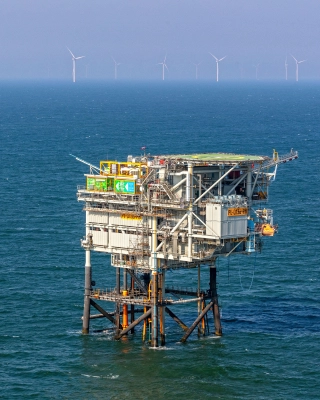
For a long time, offshore hydrogen production was primarily the subject of studies, research, and future scenarios. Now it is actually happening. For the first time, PosHYdon has produced green hydrogen on an operational gas platform in the North Sea.
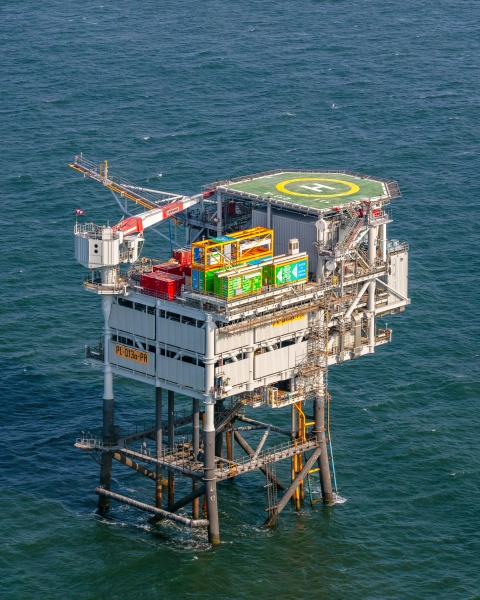
Production is taking place on the Q13a-A platform, located approximately thirteen kilometres off the coast of Scheveningen, the Netherlands. For production, seawater is purified and then converted to hydrogen through electrolysis powered by electricity generated by offshore wind. In this manner, PosHYdon combines offshore wind energy, green hydrogen, and natural gas production at a single existing platform. It is precisely this combination that makes PosHYdon relevant for the further development of the energy system in the North Sea.
Hydrogen is widely regarded as an important building block for a future-proof energy system. As production of sustainable energy at sea increases, so does the need for storage to enable supply when needed. Offshore production of hydrogen is one possible solution. Within PosHYdon, Iv delivered the engineering for integrating the hydrogen installation into the existing Q13a-A platform.
According to Fedor van Veen, Managing Director Offshore & Energy at Iv, the PosHYdon project’s main value lies in the experience it provides. “PosHYdon demonstrates what offshore hydrogen production requires in practice: system integration, safety, and an understanding of existing infrastructure. That experience is necessary in order to scale up future projects safely and reliably.” The interaction between various installations, operational processes, and the conditions under which offshore energy projects operate is relevant. Research is also being carried out to assess how the system responds to the variable supply of offshore wind energy.
The amount of renewable energy generated at sea is growing. However, wind does not supply the same amount of electricity continuously. During high winds, a surplus can be generated, while at other times, production is reduced. At the same time, there is increasing pressure on electricity infrastructure. Because of this, it is becoming increasingly important to address the question of how renewable energy can be integrated into the system in a more intelligent way.
Whether hydrogen will ultimately be produced on a large scale offshore depends on technical, economic, and policy developments. In any case, the first hydrogen produced by the PosHYdon project does represent an important step in building knowledge. This marks a step from planning and research to learning by doing.
Fedor, managing director Offshore & Energy and also COO of Iv, would be delighted to discuss this with you! Get in touch via +31 88 943 3300 or send a message.