Porthos: from gas platform to CO₂ injection platform
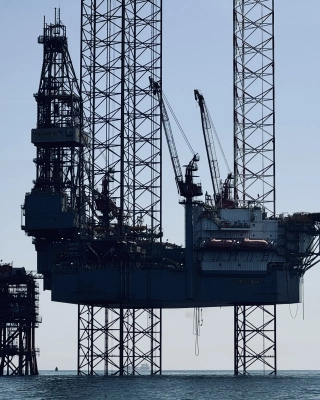
Porthos is a large-scale CO₂ storage project in which captured CO₂ from industry in the Port of Rotterdam is transported via a pipeline to an offshore storage location in depleted gas fields beneath the North Sea. The CO₂ is injected into reservoirs more than three kilometres beneath the seabed.
For the Porthos project, Iv carried out the Front End Engineering Design (FEED) for the conversion of the existing P18-A gas production platform into a CO₂ injection platform. Iv developed the necessary system-level modifications and, in doing so, definitively mapped out the technical and safety preconditions for the conversion of the platform.
The P18-A platform was assigned a new role within the CO₂ transport and storage chain. This required the existing offshore infrastructure to be modified for a new application under process conditions different from those for which it was originally designed.
Facilities, pipelines, and wells had to be assessed for their suitability for CO₂ injection, including with regard to pressure conditions, material behaviour, integrity, and the specification of the CO₂ stream. The presence of impurities and water in CO₂ is a key factor in determining corrosion risks and, consequently, the choice of materials and the service life of the facilities.
The thermodynamic properties of CO₂ at elevated pressure (supercritical conditions) also required specific attention in the design. Changes in pressure and temperature during transport and injection affect the behaviour of the CO₂ stream and impose requirements on design conditions, the control of process parameters, and the interaction with the reservoir.
The challenge, therefore, lay not only in applying CO₂ technology, but primarily in implementing it within existing offshore infrastructure without disrupting the continuity of existing processes. Design choices had to be aligned with the available space and energy supply. Furthermore, working with CO₂ under pressure places additional demands on the safety and reliability of the design. The storage site had to operate under controlled conditions for an extended period, with monitoring, an extensive testing and verification programme, and maintaining the integrity of installations and wells playing a central role.
With a total storage capacity of approximately 37 million tonnes of CO₂ and an annual processing capacity of about 2.5 million tonnes, the project makes a tangible contribution to reducing industrial CO₂ emissions. It also supports the development of CO₂ transport and storage as part of the energy system, particularly for sectors where emission reductions through other measures are limited.
By reusing existing offshore infrastructure such as platforms and wells, the need for new construction is reduced and the value of existing energy assets is extended. This contributes to the efficient, future-focused use of existing infrastructure and to the further development of CO₂ storage as part of the energy transition. The Porthos project strengthens the position of the Port of Rotterdam area as a European hub for CO₂ transport and storage.
Fedor, managing director of Offshore & Energy/Infra and also COO of Iv, would be delighted to discuss this with you! Get in touch via +31 88 943 3300 or send a message.