Limmel floodgate and composite steel-concrete bridge
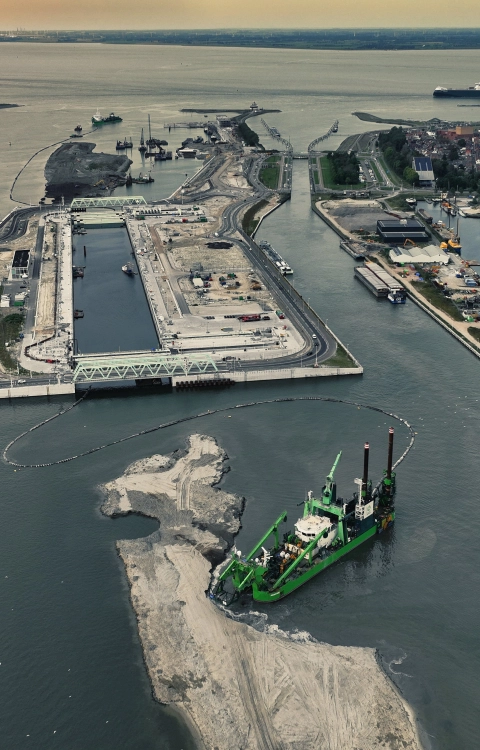
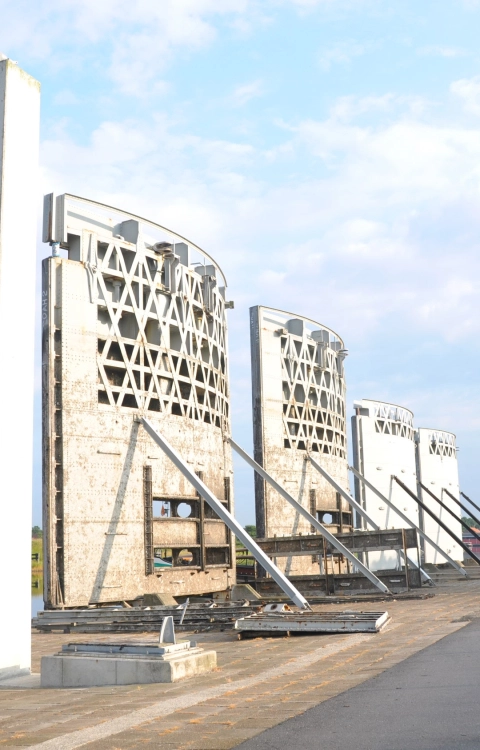
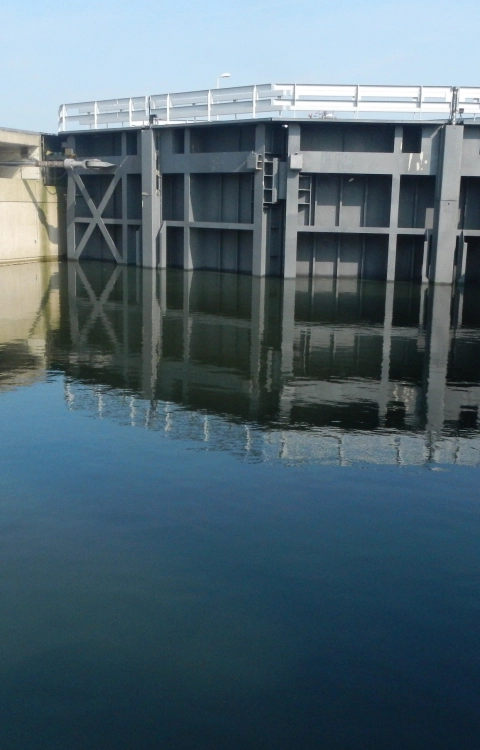
The new Limmel Floodgate replaces the nearly 100-year-old navigation lock in the Juliana Canal near Maastricht, the Netherlands. The original lock featured two steel gates separated by a central pier within the navigation channel. In the new design, these have been replaced by a single steel lift gate, which is suspended above the waterway when open and lowered onto the sill during periods of high water.
This solution increases the available width for navigation without requiring the canal to be widened, while also protecting the surrounding area against extreme water levels in the River Meuse.
The Limmel Floodgate was the first hydraulic engineering project within the Rijkswaterstaat Lock Programme to be delivered under a Design, Build, Finance and Maintain (DBFM) contract. Construction company BESIX, together with investment partner Rebel, was responsible for the design, construction, financing and 30 years of maintenance of the project.
Iv designed the steel lift gate and the concrete levelling gates installed in the bypass culverts. As well as the composite steel-concrete bridge carrying separate carriageways for road traffic and cyclists.
Iv experts were challenged to design the lightest possible sector gate, eliminating the need for heavy counterbalancing. This significantly simplified the overall lock structure. Designing a single large steel lift gate requires extensive expertise in steel structures, hydraulic loading and movable flood defense structures. Iv developed a structural system comprising two lenticular girders with a water retaining skin plate positioned along the neutral axis. This configuration separates local and global load effects while reducing the influence of plate buckling on the required plate thickness.
The design also made effective use of the gate’s relatively low torsional stiffness. This allowed more generous construction tolerances for the lifting towers without compromising the performance of the sealing system. In addition, the design was verified ensuring reliable closure under maximum flood discharge conditions and to control hydrodynamic vibrations.
In consultation with BESIX, concrete gates were selected for the culverts to provide automatic closure in the event of an emergency.
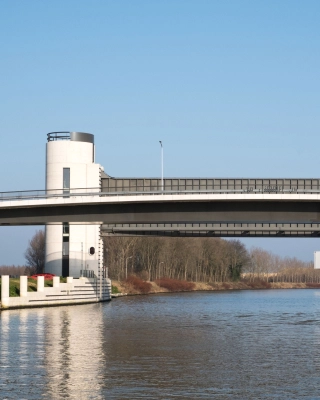
To improve safety for pedestrians and cyclists, a new motorway bridge with separate traffic lanes was constructed across the Juliana Canal. Iv based the design on a composite steel-concrete box girder, making optimum use of the strengths of both materials, with concrete resisting compression and steel carrying tension. The resulting structure spans the canal without intermediate supports.
The final design resulted in a robust steel lift gate weighing approximately 180 tonnes, around 100 tonnes lighter than the alternative concepts developed during the tender phase. Removing the central pier allows larger vessels to pass through the lock without widening the canal.
The new gate provides reliable flood protection while remaining readily accessible for inspection through carefully detailed sealing arrangements. Maintenance of the operating mechanism can also be carried out with the gate suspended clear of the navigation channel, minimising disruption to shipping. The project combines effective flood protection with an efficient lightweight steel design. As well as improved navigability and a construction approach that minimised disruption to shipping traffic.
Over the years, we have built up an impressive track record of infra & water projects.
Wouter, managing director Infra and also COO of Iv, would be delighted to discuss this with you! Get in touch via +31 88 943 3200 or send a message.