Modular concrete bridges based on IFD principles
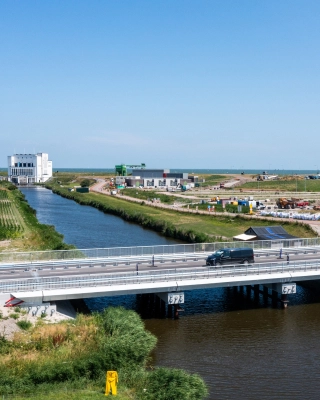
Modular concrete bridge based on IFD principles on the N240 near Medemblik.

The project

Province of North Holland replaced two almost identical fixed concrete bridges along Medemblikkerweg, part of the N240 road near the city Medemblik. The project team designed these modular concrete bridges according to Industrial, Flexible and Demountable principles, known in the Netherlands as IFD. This approach uses structural elements that project teams can extend, dismantle or reuse in the future. Notably, the design team applied the principles to the bridge deck, concrete substructure and foundations.
Iv was involved from both project management and structural engineering perspectives in translating the IFD principles into a constructible structural design. Iv worked closely with client Province Noord-Holland and contractor K_Dekker Bouw & Infra. Together, the project partners reviewed and validated key design decisions. This collaboration helped the team identify technical risks early and develop integrated solutions.
Precast elements
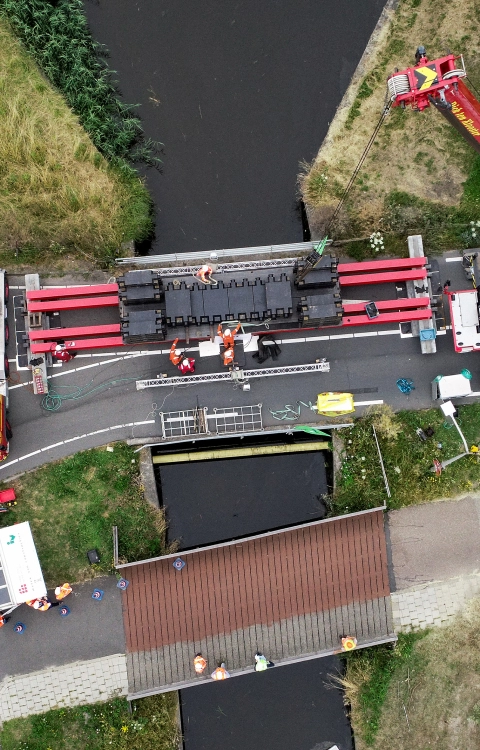
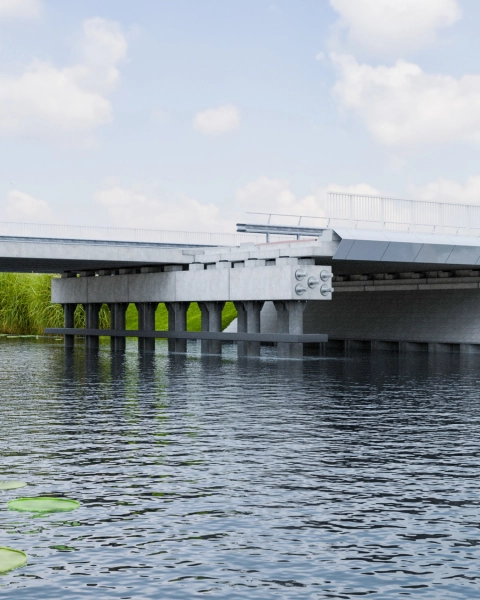
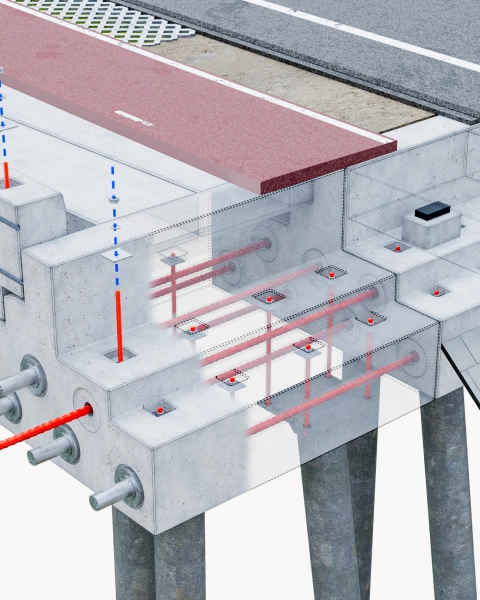
The bridges consist of individual precast elements with demountable connections. Two abutments and two intermediate piers form the substructure, while open-ended steel tubular piles support it. Prestressed bolts connect the precast foundation elements to the piles. Horizontal prestressing bars join the foundation elements together. This configuration allows future project teams to remove individual components or extend the structure.
 
The bridge deck also has a modular design. Precast prestressed girders without a structural topping form the deck. The prestressing system allows future project teams to disconnect the girders and remove them individually. In addition, the extensive use of identical girders reduces the number of unique components. This approach simplifies future replacement and reuse.
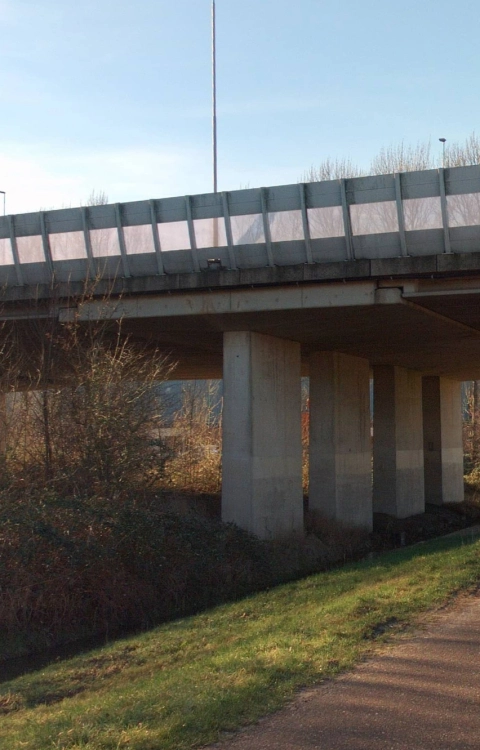
Modular concrete bridge based on IFD principles over a waterway near Medemblik.

The challenge

Designing modular concrete bridges according to IFD principles involved more than simply using precast components. The complete structure needed to remain both modular and structurally reliable. At the same time, the connections needed to support controlled dismantling in the future. In particular, the demountable substructure and extendable pile foundation required solutions for which the industry had relatively little practical experience.
Key lessons
The positional accuracy of the foundation piles presented a major technical challenge. The project team drove the steel tubular piles internally and omitted grout to preserve their recoverability. However, the team found it particularly difficult to achieve the required tolerances for the raking piles. A design tolerance of plus or minus 100 millimetres still required additional engineering to ensure a proper fit between the connections.
The project team applied lessons from the first bridge directly to the second. For example, the team used modified installation equipment to improve the construction process.
The transverse prestressing system in the bridge deck provided another important lesson. In the current configuration, a future project team must first remove the prestressing before dismantling the girders. For future applications, a dry mechanical connection could offer greater control during dismantling. Such a connection could also help prevent damage to the girders.
Technical model of a modular concrete bridge designed according to IFD principles.

The impact

The two modular concrete bridges demonstrate how engineers can apply IFD principles to fixed concrete bridges. Their modular configuration allows future project teams to replace, add or reuse structural components. This flexibility helps the design accommodate changes in future traffic use. It also creates opportunities to retain the value of individual components for longer.

The precast construction method also reduced the amount of work on site. For example, the project required less formwork, reinforcement fixing and wet concrete work. This approach gave the project team greater control over the construction process and helped reduce disruption to the surrounding area. At each location, the contractor demolished the existing bridge and constructed its replacement in approximately 4.5 months.
 
At the same time, the project generated practical knowledge for future IFD projects. The lessons highlight the importance of further standardising connections, assembly provisions, transverse prestressing systems and precast components. In this way, the project supports a more scalable approach to replacing and renewing civil engineering structures.
 
(Images:  Province of North Holland, Michiel Wijnbergh, Iv | animation: Province of North Holland)

IFD-construction in practice: modular fixed concrete bridges

Related projects

Over the years, we have built up an impressive track record of civil engineering projects related to concrete structures.

View all projects in this market

Curious about the possibilities for your project?

Wouter, managing director Infra and also COO of Iv, would be delighted to discuss this with you! Get in touch via +31 88 943 3200 or send a message.

Send Wouter a message
Wouter van der Wiel