Lock and weir gate design for the Canal del Dique modernisation
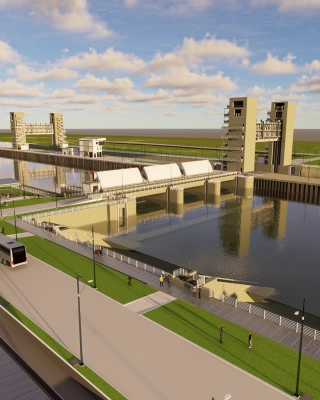
Canal del Dique connects the Magdalena River to Cartagena Bay in northern Colombia. Its modernisation improves flood protection, climate resilience and ecological recovery, while providing greater control over water flows and sediments. The wider programme includes reinforced dikes, hydraulic structures, sediment management and measures to improve water quality and surrounding ecosystems.
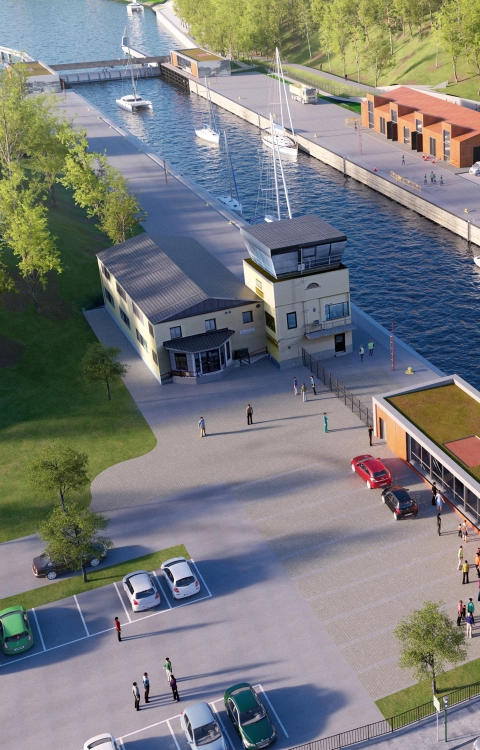
The programme includes two new lock complexes at Calamar and Puerto Badel. These structures regulate water levels and discharges between the Magdalena River, Canal del Dique and the surrounding bays. In doing so, the complexes help to control unwanted water and sediment flows and reduce saline intrusion.
Sacyr appointed Iv to optimise and develop the conceptual design of the lock gates and their operating systems. Iv’s scope also covered the movable weir gates at the Puerto Badel and Calamar complexes.
The lock and weir gate design for Canal del Dique had to balance reliability, availability, maintainability and safety. Experts of Iv assessed alternative gate concepts against these RAMS criteria. They also selected vertical lift gates and mitre gates for the locks and an upward-opening radial gate for the weir at Calamar. Iv developed the selected concepts into a preliminary design covering the principal structural and mechanical decisions. The design provides a future manufacturer with the technical basis needed to complete the detailed and fabrication designs. Managing the interfaces with Lande’s hydraulic design and Intecsa’s civil engineering design was an important part of this work.
The optimized design of the vertical lift gates comprises welded steel structures with centrally positioned watertight skin plates. Electrically powered winches and gearboxes operate the gates. Counterweights housed in the lifting towers reduce the required drive force and help the gates close reliably when exposed to upward forces caused by flowing water.
Each mitre gate consists of two steel leaves rotating about vertical axes. A hydraulic cylinder and drive arm housed in a chamber within the concrete structure operate each leaf independently. Self-activating rubber seals provide the required watertight closure.
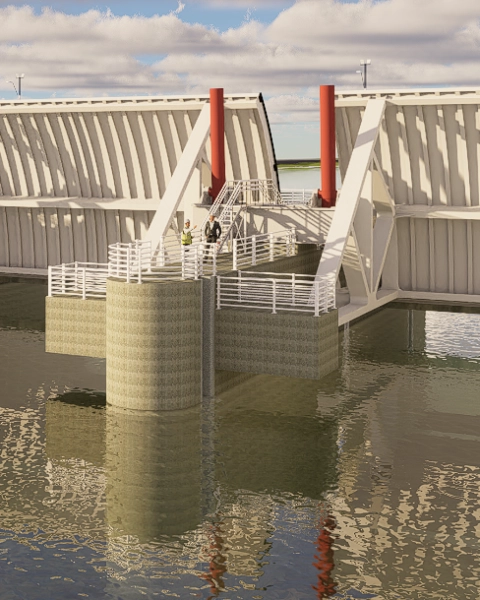
For the Calamar weir, Iv designed three fully welded radial gates, each spanning a 20-metre opening. The gates have a radius of 13 metres and are operated by hydraulic cylinders. Upstream and downstream maintenance slots allow the structure to be isolated and dewatered for major maintenance.
The preliminary lock and weir gate design provides a technically substantiated basis for further engineering and fabrication. By integrating the steel structures, operating systems, seals, maintenance provisions and design interfaces, Iv supports the development of reliable and maintainable hydraulic structures.
The Calamar and Puerto Badel complexes provide greater control over water levels and discharges across the Canal del Dique system. The gate designs – developed by the experts of Iv – therefore support the wider objectives of flood protection, sediment-flow management, reduced saline intrusion and ecological recovery.
Over the years, we have built up an impressive track record of infra & water projects.
Wouter, managing director Infra and also COO of Iv, would be delighted to discuss this with you! Get in touch via +31 88 943 3200 or send a message.